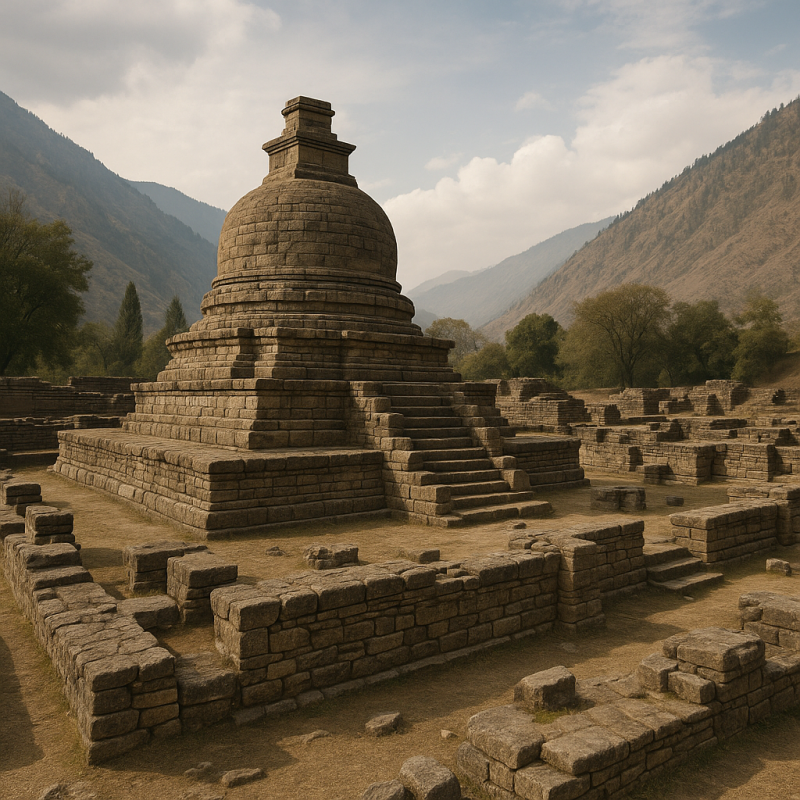
A newly unearthed Buddhist complex in Kashmir is drawing attention for all the wrong reasons. At first glance it looks like a standard archaeological discovery, but several structural features stand out in ways that don’t match the expected timeline. The stonework displays a level of precision that seems out of sync with the surrounding cultures of the period, and some of the architectural choices appear borrowed from traditions that should not have been present in this region at that time.
What makes the site even more intriguing is the absence of clear transitional layers. Instead of showing gradual development, it appears as if an advanced building style emerged suddenly and then disappeared just as quickly. Archaeologists are already divided, with some pushing for a conservative explanation and others quietly admitting that parts of the site don’t align with any known cultural trajectory.
Finds like this rarely rewrite history on their own, but they often point to gaps we’ve overlooked. Whether this complex represents forgotten knowledge, cultural transfer we can’t yet trace, or simply an anomaly waiting for a better explanation, it highlights the same recurring pattern we see worldwide: moments where the past refuses to fit neatly into our established frameworks.