At the deepest levels of physics, reality stops behaving like matter and starts behaving like mathematics. Particles emerge from equations, constants refuse to change, and symmetry governs what is allowed to exist at all. The discovery of fundamental particles did not simplify the universe; it exposed a deeper layer of structure beneath it.
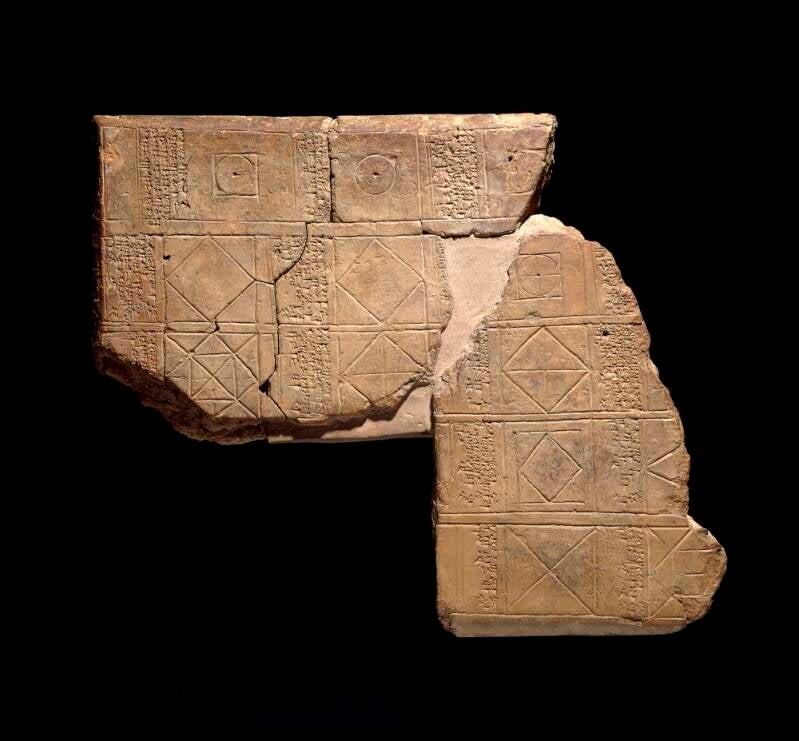
This is where modern inquiry quietly reconnects with ancient frameworks. Long before laboratories and detectors, civilizations treated numbers as the organizing principle of reality. Geometry was not decoration; it was compression. Ratios were not symbolic; they were constraints. What later became numerology originally functioned as a system for mapping cycles, limits, and recurrence.
The reappearance of these patterns in contemporary physics does not prove ancient foresight, but it raises an uncomfortable question. Why do the same numerical relationships surface at the beginning of civilization and at the edge of modern science? Some structures seem to persist regardless of culture, technology, or belief, as if reality itself enforces them.
The investigation is not about mysticism. It is about a structure that refuses to disappear.