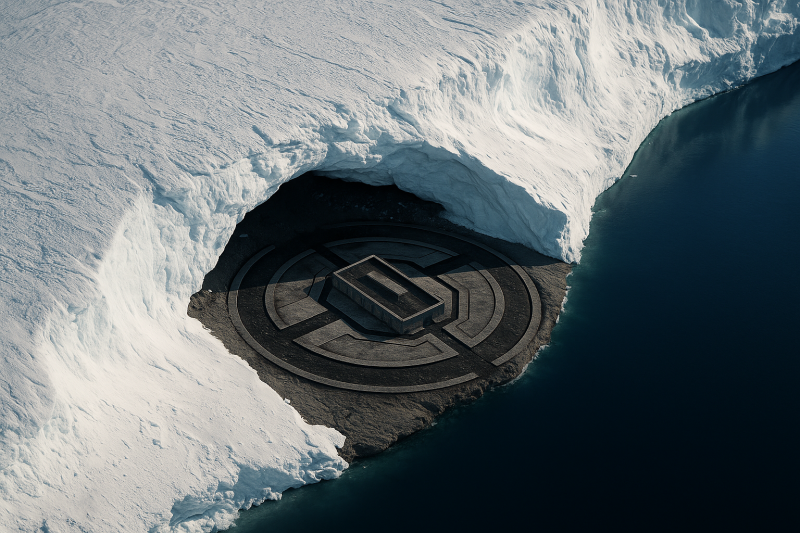
Over the past decade, Antarctica has quietly moved from being a climate-focused research zone to a recurring focal point in intelligence discussions, satellite analysis, and disclosure-related research.
Modern radar mapping and satellite imagery have confirmed that vast landscapes exist beneath the Antarctic ice sheet. Mountain ranges, valleys, and subglacial formations have been preserved under kilometers of ice, creating one of the least explored environments on Earth. These discoveries alone are scientifically significant, regardless of speculation.
What draws increased attention, however, is not just what lies beneath the ice, but how the continent is treated. Antarctica remains one of the most restricted regions on the planet, governed by international treaties that limit excavation, military activity, and public access. Certain areas are monitored closely, while others remain largely unexplored.
At the same time, polar regions continue to surface in disclosure-related conversations. Former intelligence officials, independent researchers, and military documents repeatedly reference extreme environments such as deep oceans, high altitudes, and the poles when discussing unidentified aerial phenomena and non-human intelligence hypotheses.
This convergence raises legitimate questions. If advanced technology, ancient cultures, or long-term preservation strategies ever existed on Earth, polar regions would offer unmatched concealment and stability over long periods of time. Ice does not destroy, it preserves.
None of this confirms the existence of hidden civilizations or non-human infrastructure beneath Antarctica. What it does confirm is that the poles occupy a unique position at the intersection of science, geopolitics, and unexplained phenomena.
As satellite technology improves and historical data continues to be reexamined, Antarctica is likely to remain central to discussions about Earth’s unexplored past and the broader disclosure landscape. Learn More On Substack